


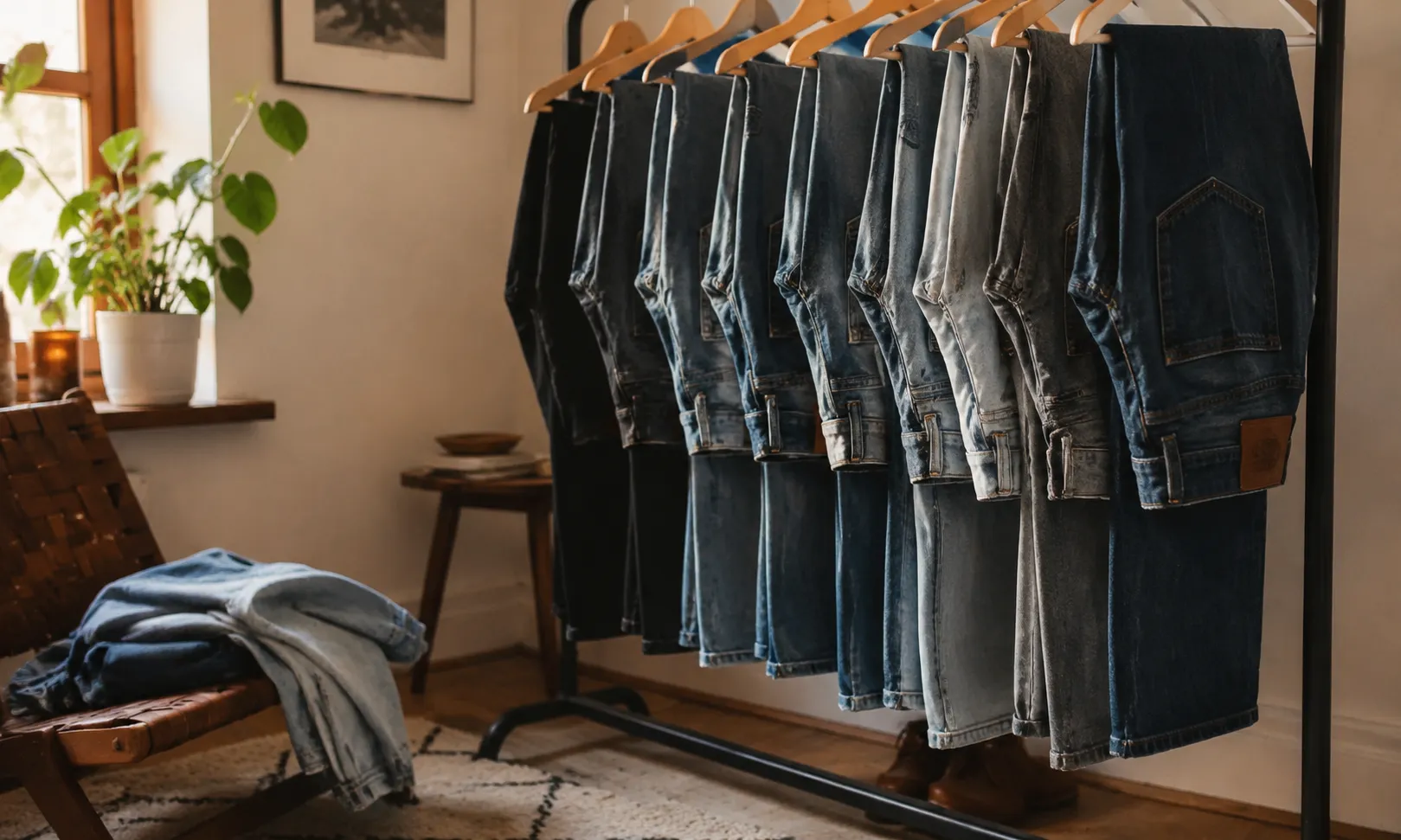

Everyone has a pair of jeans story. Maybe it’s the ones you impulse-bought on sale that have lived in the back of your closet since2019. Maybe it’s the hunt that took three malls and six fitting rooms and still ended in defeat. Jeans are supposed to be the simplest thing in your wardrobe a baseline, a fallback, the piece you reach for without thinking. And yet for most people, buying them feels like defusing a bomb.
The reason isn’t sizing inconsistency, though that’s real and infuriating. The deeper issue is that most people never learned how to shop for their actual body. They learned how to shop for an idea of their body the one that looked good in magazine spreads, on mannequins cut from a single template. So they keep chasing fits that weren’t designed for them, and they keep losing.
This is the guide that changes that.
Start With Structure, Not Style
Before you think about wash, cut, or brand, you need to understand one thing: proportion. Your body has a natural silhouette a relationship between your shoulders, waist, hips, and inseam length. Jeans don’t create that silhouette. They either work with it or against it.
The most common mistake people make is shopping by style preference before accounting for structure. You see a wide-leg trouser jean on someone with a different hip-to-waist ratio than yours, you love how it looks, you buy the same pair. Then you spend a month trying to convince yourself it’ll “grow on you.” It won’t. The fit was never right to begin with.
So before you walk into any store or open any website, take three measurements: your natural waist (the narrowest part of your torso, not where your jeans typically sit), your hips at their widest point, and your inseam. Write them down. These numbers are your compass.
The Logic Behind Body-Specific Fits
Straight bodies where shoulders, waist, and hips measure roughly similar have the most freedom. Almost any cut works because the silhouette doesn’t require visual correction. The risk here is actually over-styling. A high-waisted wide-leg on a straight frame can flatten everything out rather than create dimension. Mid-rise skinny or straight-leg styles tend to bring out length and definition naturally. If you’re in this category and you’ve been defaulting to baggy fits hoping for “cool,” you might just be hiding a frame that doesn’t need hiding.
Pear-shaped bodies, where hips are noticeably wider than the shoulders, often struggle because standard sizing is built around a smaller hip-to-waist differential. A waist that fits typically gaps at the back. A hip that fits can feel restrictive at the thigh. The answer isn’t to go up in size and then deal with excess fabric everywhere it’s to seek out brands that specifically engineer for a higher hip-to-waist ratio, or to build in the budget for a single alteration at the waist. A tapered straight-leg or a subtle bootcut balances the upper and lower body without screaming “I’m compensating for something.” Avoid ultra-high-rise skinny fits they tend to emphasize hip width without adding anything to the upper half.
Apple shapes, where weight and volume sit more in the midsection, do best with a mid-to-high rise that provides coverage and support without cutting in. The instinct is often to reach for low-rise to avoid the dreaded waistband press but low-rise actually creates more bunching and visual bulk right where you don’t want it. A straight or relaxed leg with a clean, higher waistband elongates the body and moves the eye up and down rather than across. Dark washes work particularly well here, not because darker is always better, but because minimal contrast means minimal visual interruption.
Hourglass frames where the waist is significantly smaller than both hips and bust sound like the ideal candidate for all jeans, but the reality is more complicated. The hip-to-waist gap is often extreme enough to cause the same fit issues as a pear shape. High-waisted styles look excellent proportionally, but again, the back waistband gap can be a serious problem. Look for stretch-denim blends that accommodate both measurements without looking pulled. Flared cuts and wide-legs amplify the proportions in a way that’s visually striking; skinny jeans can sometimes flatten the hip curve you’re working with.
The Rise Question Nobody Answers Honestly
Rise the distance from the crotch seam to the waistband is probably the most misunderstood measurement in denim. People talk about it in terms of trend (low-rise is back, high-rise is classic) when they should be talking about it in terms of torso length.
If you have a long torso relative to your legs, a very high rise will eat into your upper body and make you look shorter. A mid-rise sits more naturally and keeps the visual divide where it flatters. If you have a shorter torso, high-rise is your best friend it creates the illusion of length in the upper body and makes legs look endless. The trend cycle doesn’t care about your torso. Your torso does.
The crotch length also matters more than anyone admits. A crotch that’s too long creates a saggy, unflattering pull even when the waist and hip measurements are technically correct. A crotch too short is uncomfortable and visually disruptive. Most people just accept one or the other as “how jeans feel.” They don’t have to.
What the Fitting Room Actually Tells You
A fitting room is not a place to decide whether you like how you look in general. It’s a diagnostic tool. You’re checking specific things.
Sit down. Immediately. Most people try jeans standing up, maybe do a small squat, and call it a day. But jeans that fit perfectly standing can dig into your stomach, gap at the back waistband, or pull uncomfortably across the thighs the moment you’re seated. Since you will, in fact, sit down at some point in your life, this matters.
Check the thigh specifically, the amount of space between the fabric and your leg. With a slim or straight leg, you want enough room that you can pinch a small amount of fabric. If the denim is stretching to accommodate you with zero give, they’re too small. If the fabric is bunching in folds, they’re too big. Neither will photograph the way you’re hoping.
Look at where the waistband falls when you’re not holding your breath or sucking anything in. That’s where it will sit at hour six of wearing them. The flattering version in the mirror under fluorescent lights with your best posture is not the version that will show up on your Tuesday afternoon.
Stretch Versus Rigid Denim The Honest Trade-Off
Stretch denim has largely taken over the market, and for good reason. It accommodates more body variation, it moves, it’s comfortable in a way that rigid denim takes months to become. But it has a real limitation: it changes shape with wear. After a full day, stretch jeans often bag out at the knees and seat in a way that structured denim doesn’t. If you need jeans for something where appearance needs to hold up over hours, rigid or low-stretch denim stays true longer.
For everyday wear, a mid-weight denim with two to four percent elastane is the sweet spot enough give to fit real bodies without the bagging problem of high-stretch styles.
Brand and Price Don’t Work the Way You Think
Expensive jeans are not automatically better fits. They’re often better quality denim, better hardware, better construction but fit is entirely separate from price. A $40 pair from a fast-fashion brand that happens to match your measurements will look better than a $300 pair that doesn’t.
Where price does matter is in longevity and how the denim wears over time. Cheaper denim tends to fade unevenly, lose structure faster, and fray in ways that look accidental rather than intentional. If you find a silhouette that genuinely works for you, it’s worth investing in a version that will hold that shape for years.
The real move is to identify the fit first at any price point, understand exactly what makes it work on your body, and then use that knowledge to shop across the market. One pair of jeans that fits correctly teaches you everything. It tells you your true waist and hip measurement in real denim sizing. It tells you your ideal rise, your ideal leg opening, your ideal inseam. Every purchase after that becomes a calibration rather than a gamble.
That’s the goal not a wardrobe full of jeans, but the knowledge to buy the right ones, every time.


