


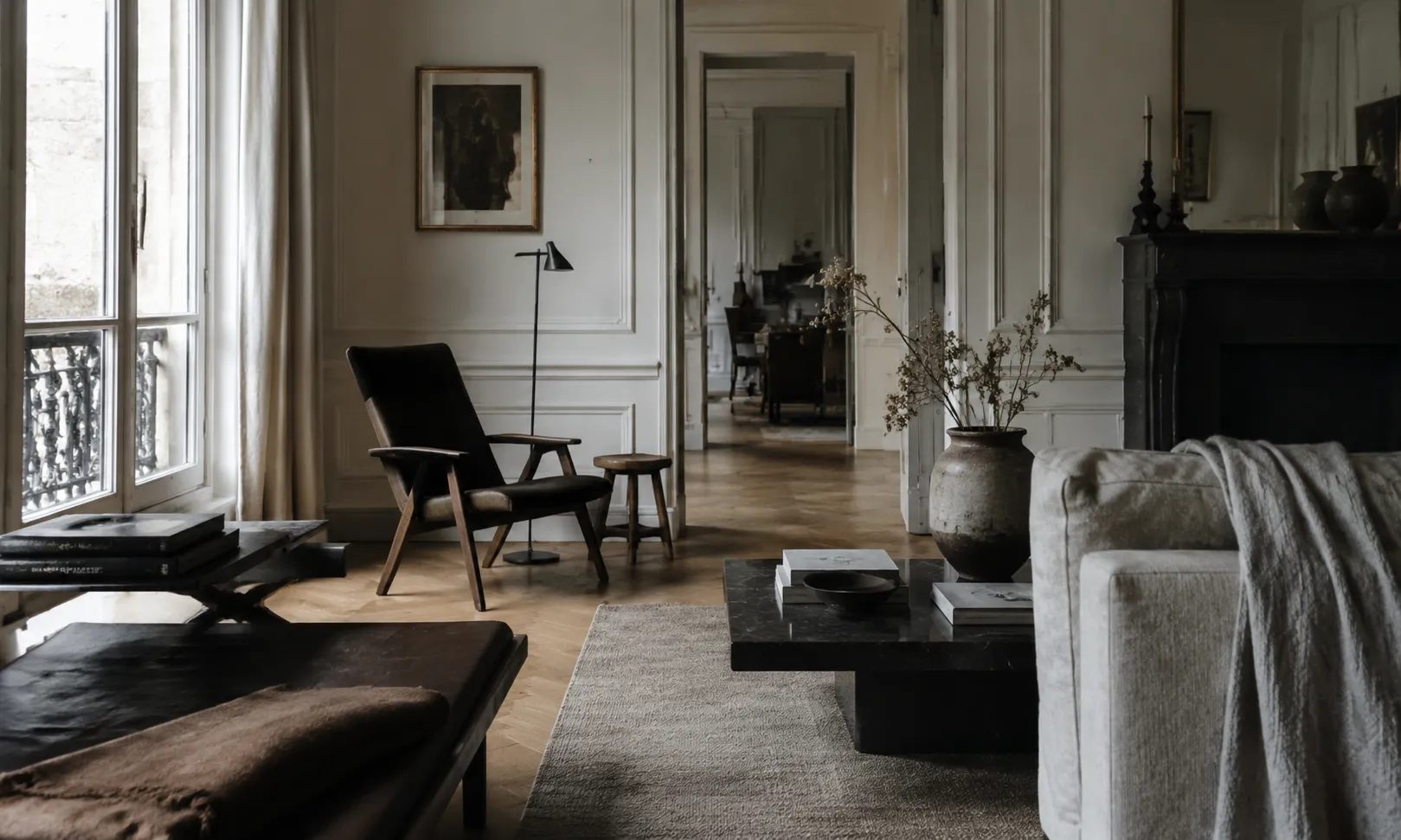

The Uniform of People Who Don’t Need to Prove Anything
There’s a particular kind of confidence that doesn’t announce itself. You’ve probably seen it a woman in a cream cashmere sweater, perfectly fitted trousers, leather loafers worn soft at the heel. No logo. No statement. Just an almost architectural stillness about the whole ensemble. You notice her, and then you notice that you noticed, and then you wonder why. That’s quiet luxury at work. And the reason it keeps resurfacing in culture and keeps refusing to go away is that it’s not really about clothes at all.
The phrase itself has been everywhere lately, accelerated by the HBO series Succession, where the Roys wore their inherited wealth in muted palettes and impeccably cut wool. The internet caught on fast. TikTok tagged it. Fashion editors named it the aesthetic of the season. Critics sharpened their pens. And somewhere in all that noise, the legitimate cultural question at the center of it got a little obscured: why does this particular look resonate so deeply, and why now?
Old Money Aesthetics in a Loud World
To understand quiet luxury, you have to understand what it’s reacting against. The 2010s gave us maximalism on steroids logomania, hype culture, the drop model, the sneaker as status symbol. Supreme. Balenciaga triple S. Gucci’s Alessandro Michele era. These were clothes that wore the wearer, broadcasting affiliation and price point from across a room. They served a function: in an age of Instagram, visibility was currency. The louder the piece, the better it photographed. The better it photographed, the more cultural capital it generated.
But something started to curdle. By the early 2020s, a certain exhaustion set in. The pandemic had a lot to do with it three years of nowhere to go, nothing to perform, forced a kind of sartorial honesty. People discovered, or rediscovered, the pleasure of wearing something simply because it felt good. The quiet luxury impulse was already stirring beneath the surface long before Succession made it a hashtag.
What the aesthetic taps into is a very old idea: that real wealth doesn’t need to announce itself. The concept has a name in French “discrétion” and it’s long been embedded in the codes of European aristocracy and old American money. The families who summer in Maine and winter in Palm Beach have never needed a logo. They had something more durable: the social knowledge of where to shop, what to buy, and how to wear it. The clothes communicated to those who could read them and said nothing to those who couldn’t. That exclusivity was, in its own way, the ultimate luxury.
Why It Feels Different This Time
Here’s where it gets interesting, though. Every few years, the fashion cycle rediscovers minimalism. We’ve had it in the nineties with Calvin Klein and Helmut Lang. We had it again in the early 2010s with Céline under Phoebe Philo. The question worth asking is: what makes this particular revival feel like something more than just the pendulum swinging back?
The difference, I’d argue, is psychological and generational. Millennials now well into their thirties came of age performing identity online. They are exhausted by it. The generation that built personal brands and curated feeds is now, almost collectively, tired of curation. There’s a growing cultural appetite for things that feel genuine, durable, and low-maintenance in the deepest sense. Quiet luxury dresses that appetite.
Simultaneously, there’s a very practical economic logic at play. In inflationary times, the “buy less, buy better” philosophy makes genuine financial sense. A $600 cashmere sweater from a brand like Loro Piana or Brunello Cucinelli or even a $200 version from a smaller label lasts a decade. Fast fashion’s $30 equivalent disintegrates in eight months. When you do the actual math, the economics of quality shift. People are beginning to calculate differently.
The Critique Worth Taking Seriously
None of this goes uncontested, and it shouldn’t. The most pointed critique of quiet luxury is that it’s not democratizing restraint it’s just laundering wealth behind a veneer of virtue. The “buy less, buy better” mantra sounds responsible until you acknowledge that buying better almost always means buying expensive. Loro Piana’s cashmere is extraordinary. It’s also $1,400 for a simple crewneck. Telling someone to invest in quality makes sense if they have capital to invest. For a large portion of people, it’s simply not an option.
There’s also something worth interrogating in the way quiet luxury often codes as white, thin, and implicitly Anglo-Saxon. The “old money” aesthetic it draws from carries specific cultural DNA New England prep schools, Italian vacation homes, equestrian sports. When fashion writers celebrate “classic American style,” they are usually describing a very particular strand of American experience, not the whole tapestry.
These critiques matter. They should be part of the conversation. But they don’t entirely invalidate the underlying cultural shift they complicate it, which is where the most honest analysis lives.
What Stays When the Trend Moves On
Fashion cycles are ruthless. The maximalist backlash is already loading in the background. Sequins are back. Color is back. There will be another moment maybe eighteen months from now, maybe sooner when the dominant aesthetic swings loud again, and some headline will declare quiet luxury dead.
But here’s what I think persists underneath the trend’s surface: the values that animated it won’t disappear with the next cycle. The renewed interest in craft, in longevity, in owning fewer but better things that’s not a passing mood. It reflects something deeper about how a growing number of people want to relate to consumption itself. The specific cashmere-and-loafers uniform may fade. The appetite for intentionality behind it has deeper roots.
There’s a broader cultural movement toward what you might call deliberate living people who grow their own vegetables, read physical books, choose slow travel. Quiet luxury is that same impulse applied to a closet. It’s a preference for the tactile, the durable, the quietly beautiful over the loud and disposable.
Succession will stop being the reference point soon enough. The Roy family will recede into cultural memory. But the conversation they inadvertently reignited about what we signal with what we wear, about the relationship between wealth and taste, about what “quality” actually means in a world drowning in product that conversation was already happening. The show just gave it a convenient shorthand.
What makes quiet luxury more than a trend is precisely that it’s tangled up in these larger questions. Questions about how we display identity when display itself has become exhausting. Questions about the long-term cost of cheap things. Questions about what it means to own something that will outlast the season. Those don’t resolve when the runway moves on. They just get asked in different clothes.


